This post goes deeper on the “Non-toxic Home” video—sharing the why, the practical swaps we’ve made, and a few studies/resources that support what we’ve learned along the way.
What a “non-toxic home” really looks like
People ask all the time: What does a non-toxic home actually look like?
For us, it’s not a perfectly curated, toxin-free bubble (that doesn’t exist). It’s a home that’s becoming more intentional over time—reducing the “everyday toxic load” in ways that are realistic, sustainable, and aligned with our family’s health.
Why we started making these changes
Hi, I’m Emily. This journey started after losing my mom and my father-in-law to cancer, and then watching our own kids struggle with eczema and mold illness.
That combination—grief + unanswered health questions—pushed us to dig deeper, ask different questions, and focus on what we can control day-to-day.
We started slowly. One change at a time. And over the years we’ve learned that the biggest wins often come from addressing what we’re exposed to all day, every day—especially air, water, and food.
1) Air: what you breathe all day matters
If there’s one category that surprised us most, it’s indoor air.
Most of us spend the majority of our time indoors, and indoor air can contain a mix of particles and gases depending on the home, ventilation, cooking methods, cleaning products, humidity/mold, and more.
What we do
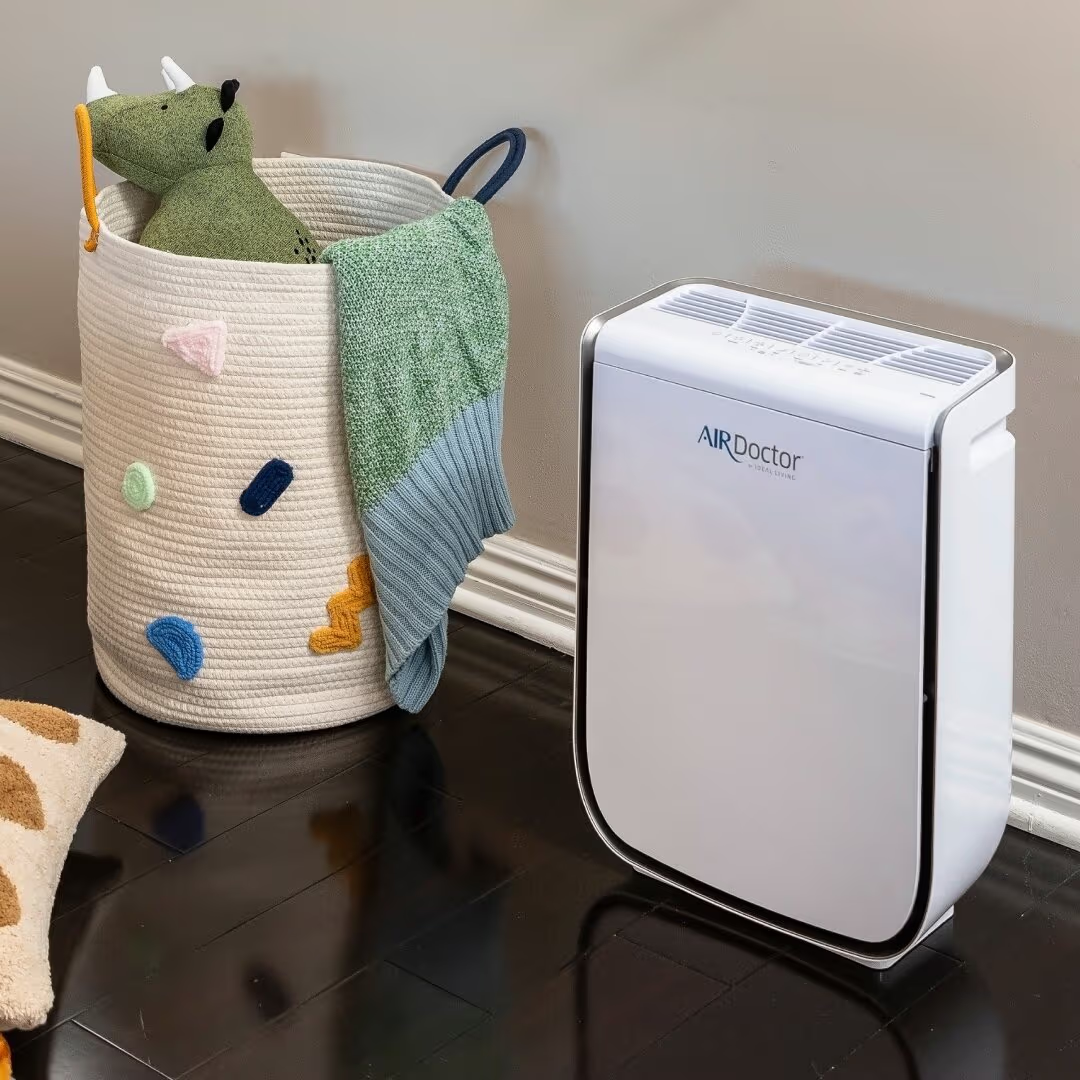
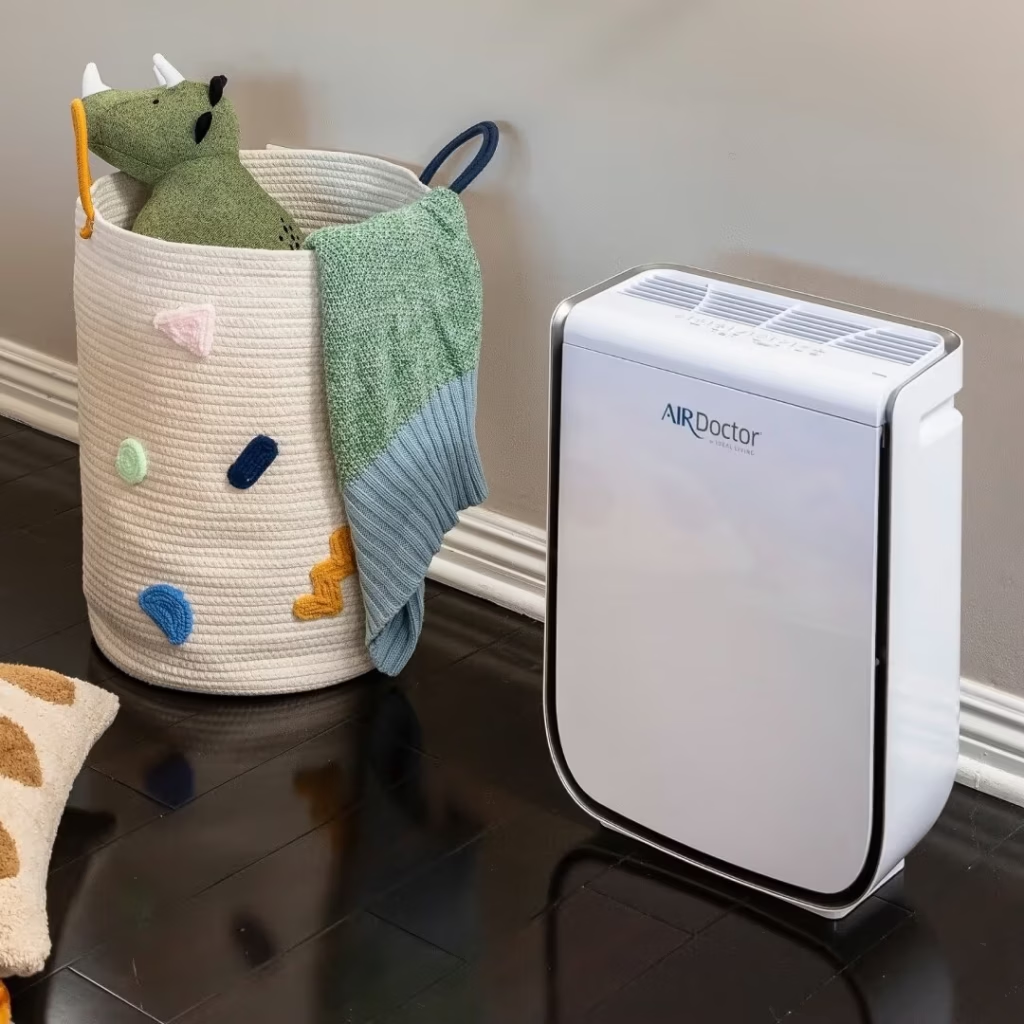
- Run high-quality air filters throughout the home.
- We also installed an ERV (Energy Recovery Ventilator) as part of our HVAC system to help keep fresh air circulating more consistently.
Supporting evidence
We didn’t begin making changes because we had a stack of studies—we began because of what our family walked through, and because we wanted to be more intentional about daily exposures.
That said, it’s been reassuring to find research that supports the general direction of focusing on indoor air quality. A 2020 narrative review on indoor/household air pollution and respiratory health discusses how indoor exposures can contribute to respiratory outcomes across the lifespan, and highlights the importance of source control, ventilation, and (for particulates) filtration.[https://pmc.ncbi.nlm.nih.gov/articles/PMC7665158/pdf/nihms-1634935.pdf]
A few relevant themes:
- Indoor pollutants can come from combustion (including cooking/heating), dampness/mold, tobacco smoke, and certain cleaning activities/products.
- The biggest wins often come from reducing sources and improving ventilation—with filtration as an important layer, especially for particulates.
2) Water: filtering + rebuilding what’s helpful
Water is another foundational category for us—because it’s something we ingest daily.
What we do
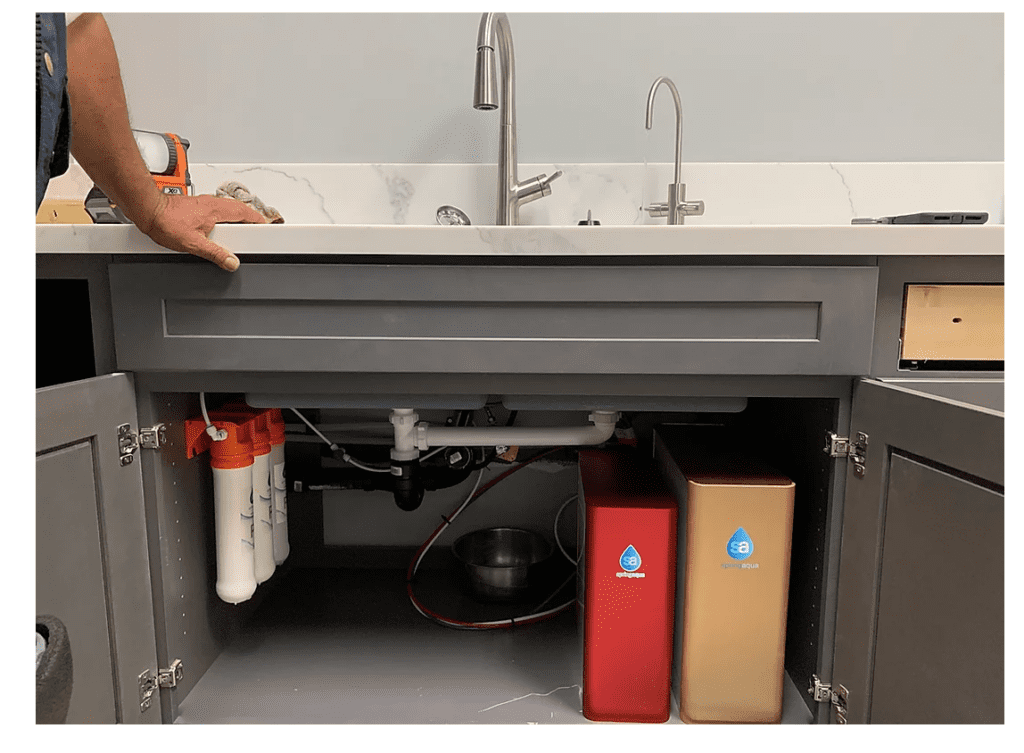
- We installed a whole-home water filter.
- For drinking water, we use reverse osmosis (RO).
- After RO, we remineralize and restructure the water so it’s more supportive to the body.
- We use the Spring Aqua unit and love it.
Supporting evidence
We focus on water because it’s foundational—something we ingest every day—and we wanted to be intentional about what’s in it.
Research can’t tell you what to buy, but it can help validate that certain water-treatment concerns (like disinfectants used in some municipalities) are real, and that treatment choices should match the issue.
One of the chemicals we really are mindful of is chloramine. It is a byproduct of the cleaning process for water, and even though the EPA ensures us they maintain safe concentrations, it is toxic and harmful to the body.
We use a catalytic charcoal whole-home filter to remove chloramine from our water. Reverse Osmosis also effectively removed chloramine from our drinking water, but it’s important to remove it from our shower and bath water as well. [https://pubmed.ncbi.nlm.nih.gov/18536485/]
Takeaway for the everyday homeowner: water is local. If you can, start by looking up your municipality’s water report and choosing filtration based on what you’re actually dealing with.
3) Food: organic when we can + local when possible
Food isn’t about perfection for us—it’s about nudging the “default” toward better options.
What we do
- Prioritize organic when we can.
- Source local as much as possible.
- Choose staples like:
- Grass-fed beef
- Local eggs
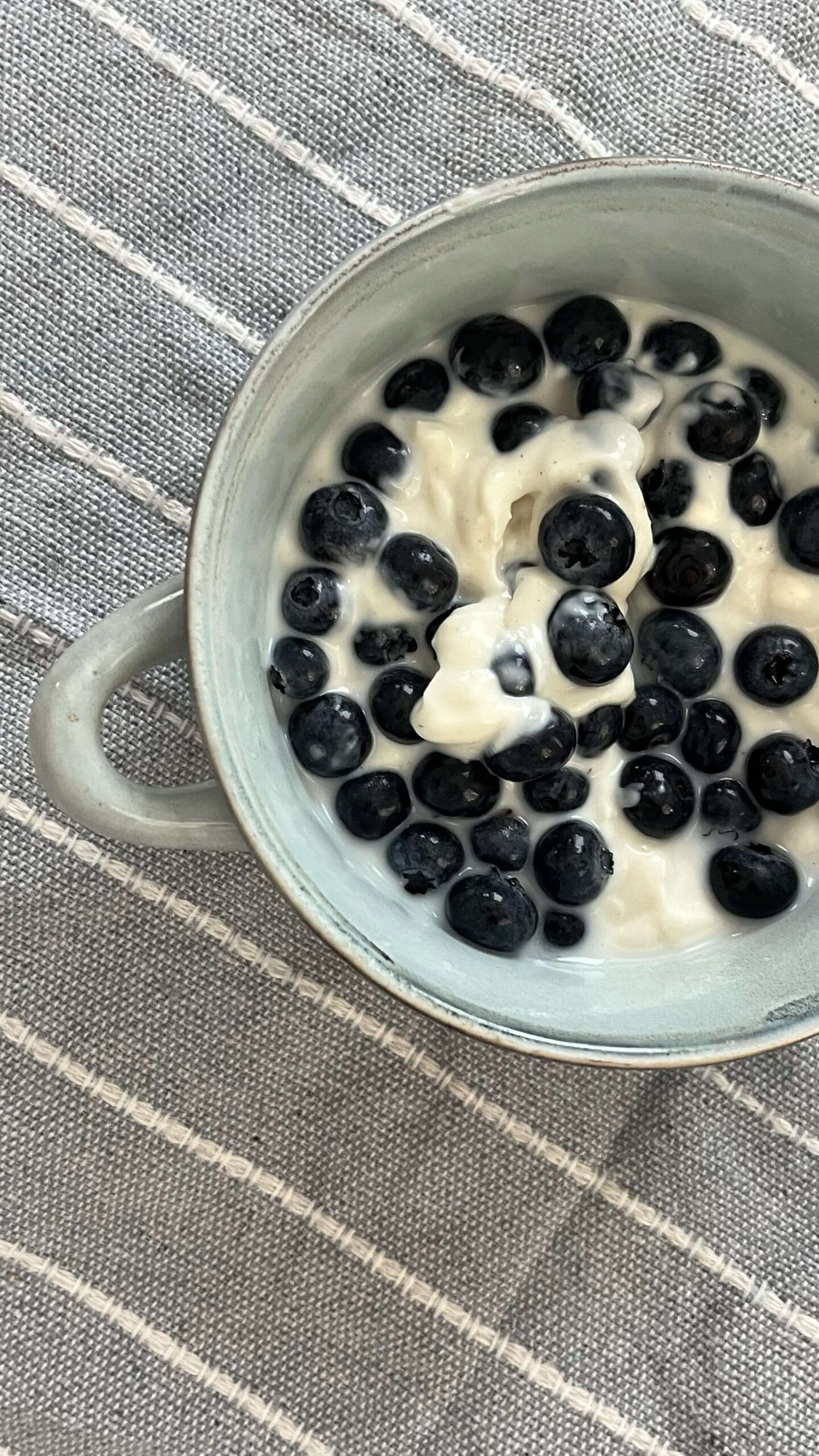
- Raw milk from trusted farms (when it’s accessible and we feel good about the source)
4) Plastics: especially heat + food contact
We try to be mindful of plastics—particularly anything that touches food or gets heated. Heating food in plastic or using plastic-based cookware can increase your exposure to chemicals like BPA, phthalates, and other endocrine disruptors that can leach into your food—especially when exposed to heat. Swapping plastic containers, utensils, and cookware for safer materials like glass, stainless steel, cast iron, or ceramic is a simple way to reduce this daily exposure. Even small changes—like avoiding microwaving in plastic or choosing a stainless steel water bottle—can go a long way in protecting your health and minimizing your overall toxin load.
What we do
- Use glass, food-grade stainless steel, or silicone whenever possible.
- Make “easy swaps,” like:
- Storing leftovers in glass instead of plastic
- Using stainless steel water bottles
- Choosing safer cooking tools (like silicone or wood spatulas and cutting boards)
Supporting evidence + context (not the reason we started)
This was one of those categories where we started with a simple instinct—minimize plastic where it’s easiest, especially around heat and food—and then looked for information that could help us think more clearly about why that might matter.
A 2022 report from Defend Our Health (“Problem Plastic”) discusses PET plastic and polyester across their lifecycle, including concerns about potential chemical exposures and conditions that may increase migration/leaching—like heat, time, light, and acidic beverages.[https://defendourhealth.org/wp-content/uploads/2022/07/PET-Report-Part1-070622d-1.pdf]
A note on sources: this is an advocacy-style report (not a peer-reviewed study). We’re not treating it as “the reason” for any change—more as a way to surface questions worth looking into and to encourage more mindful defaults where it’s easy to do so.
5) Clothing: choosing natural fibers more often
This is an area we’re still improving and learning, but we try to choose natural fibers when we can! As we’ve learned more, we’re realizing what you wear every day matters more than you think. Many conventional fabrics—like polyester, nylon, and acrylic—are made from petroleum-based materials and can shed microplastics or carry chemical residues from dyes and finishes. Choosing natural fibers like organic cotton, linen, wool, or silk helps reduce your exposure to these toxins while also being gentler on your skin. Look for brands that prioritize low-tox processing and avoid heavy chemical treatments, especially for items worn close to the body. It’s a simple shift that supports both your health and a cleaner environment.
What we do
- Prefer organic cotton, linen, and wool more often
- Search for items that are OEKO-TEX certified
- Reduce polyester, nylon, rayon, etc where it makes sense (especially in items worn close to the skin)
6) Cleaning products: what “clean” leaves behind
Most conventional cleaning products are loaded with synthetic fragrances, harsh disinfectants, and chemicals that can irritate the lungs, disrupt hormones, and linger on the surfaces we touch every day. Switching to non-toxic alternatives is a simple but powerful way to reduce your overall toxin load at home. Look for products with transparent ingredient lists, avoid “fragrance” (which often hides dozens of chemicals), and opt for plant-based or mineral-based formulas. Even small swaps—like using a vinegar-based cleaner or a safer all-purpose spray—can make a meaningful difference in the air you breathe and the environment your family lives in.
What we do
- Swap conventional cleaners for non-toxic options like Koala Eco or Branch Basics!
- Use vinegar and baking soda for a cheap and effective way to clean.
You don’t have to do everything at once.
If this feels overwhelming, here’s the truth:
- Start with one category.
- Pick one change that feels doable.
- Let momentum build.
A “non-toxic home” isn’t a finish line—it’s a direction.
Products & resources
Products mentioned in the video
- Air filters (whole-home + room filters)
- ERV (Energy Recovery Ventilator)
- Whole-home water filter
- Reverse osmosis + remineralization/restructuring (Spring Aqua)
Studies / resources referenced
- Indoor air pollution review (Clinical Chest Medicine, 2020): https://pmc.ncbi.nlm.nih.gov/articles/PMC7665158/pdf/nihms-1634935.pdf
- Chloramine removal / catalytic activated carbon (Kochany, 2008; PubMed record): https://pubmed.ncbi.nlm.nih.gov/18536485/
- PET/polyester report (Defend Our Health, 2022): https://defendourhealth.org/wp-content/uploads/2022/07/PET-Report-Part1-070622d-1.pdf





leave a comment
+ show Comments